
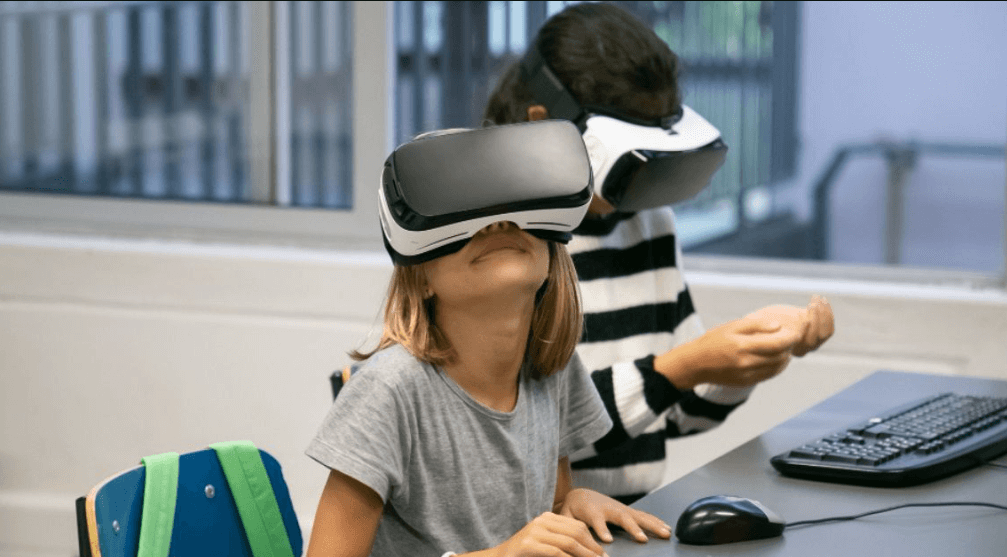
Virtual Reality is poised to redefine educational paradigms. It offers immersive experiences that enhance student engagement and understanding of complex subjects. Moreover, VR caters to diverse learning needs, promoting inclusivity. As educators explore its applications across various disciplines, questions arise about its long-term impact and potential challenges. What does the future hold for this transformative technology in classrooms? The answers may reshape the way education is approached.
The Impact of Virtual Reality on Learning Engagement
As educators increasingly seek innovative methods to enhance student engagement, virtual reality (VR) emerges as a transformative tool that captivates learners’ attention and enriches their educational experiences.
Through immersive experiences and interactive simulations, students can explore complex concepts in a dynamic environment.
This hands-on approach fosters curiosity, promotes critical thinking, and ultimately empowers learners to take charge of their educational journey like never before.
See also: What Is the Internet of Things (Iot) and How Does It Work?
Enhancing Accessibility and Inclusivity in Education
While traditional educational environments often pose significant barriers to diverse learners, virtual reality (VR) offers a groundbreaking solution that enhances accessibility and inclusivity.
By providing adaptive learning opportunities, VR creates immersive experiences tailored to individual needs, allowing students to engage with content at their own pace.
This transformative approach fosters an environment where every learner can thrive, regardless of their unique challenges.
Real-World Applications: VR in Various Subjects
Virtual reality (VR) is revolutionizing the way subjects are taught across various educational settings, enabling learners to immerse themselves in interactive experiences that deepen understanding and engagement.
In history lessons, students can explore ancient civilizations firsthand, while science experiments come to life through virtual simulations, allowing for safe exploration of complex concepts.
This innovative approach fosters curiosity and enhances educational freedom.
Future Trends: The Next Steps for VR in Education
How might the future of education evolve with the continued integration of virtual reality?
As emerging technologies advance, educators envision immersive experiences that transcend traditional classrooms. Students could explore historical events or scientific phenomena firsthand, fostering deeper understanding and engagement.
This transformation promises personalized learning journeys, breaking down barriers and empowering learners, ultimately reshaping educational landscapes for generations to come.
Conclusion
In conclusion, virtual reality is poised to redefine educational landscapes by fostering deeper engagement and inclusivity. For instance, a hypothetical case study of a VR program in a high school biology class could allow students to explore the human body in 3D, enhancing comprehension and retention. As VR technology continues to advance, its integration into curricula promises to create personalized learning experiences that not only captivate students but also prepare them for a rapidly evolving world.


 What Is the Internet of Things (Iot) and How Does It Work?